
Stove
Austroflamm wood-burning stoves combine efficient heat, high quality and distinctive design. The range spans compact models for smaller living spaces, design-led stoves, storage stoves with extended heat retention, and cook-and-bake variants - many of them also available for room-air independent operation in low-energy and passive houses.


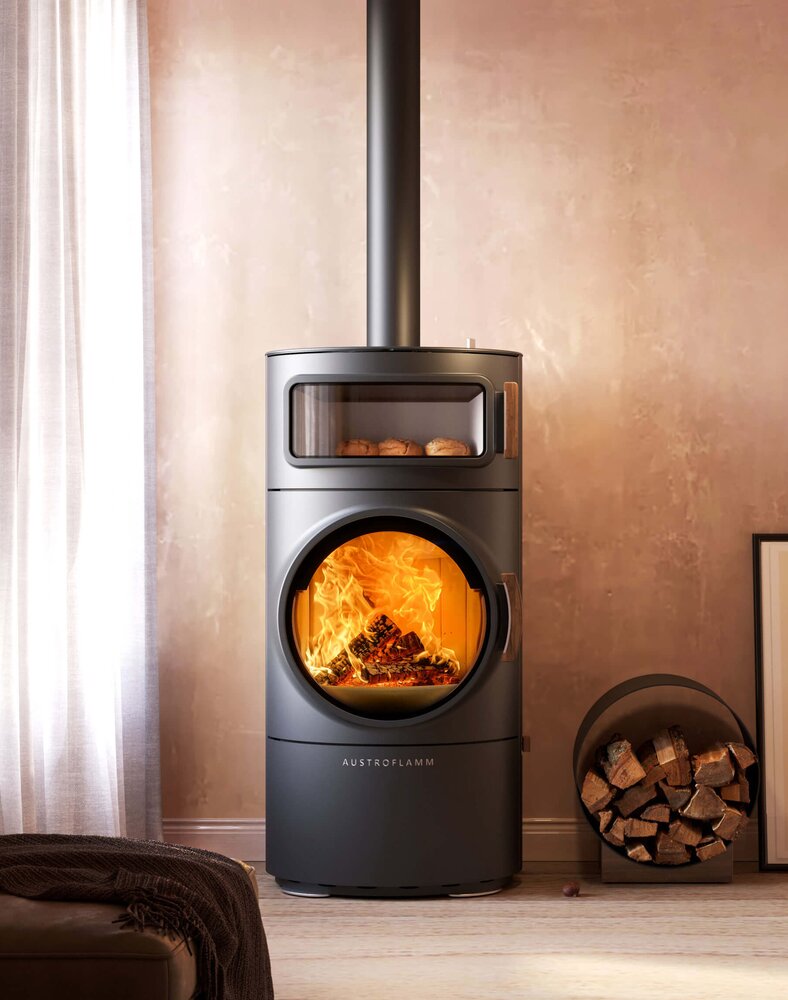
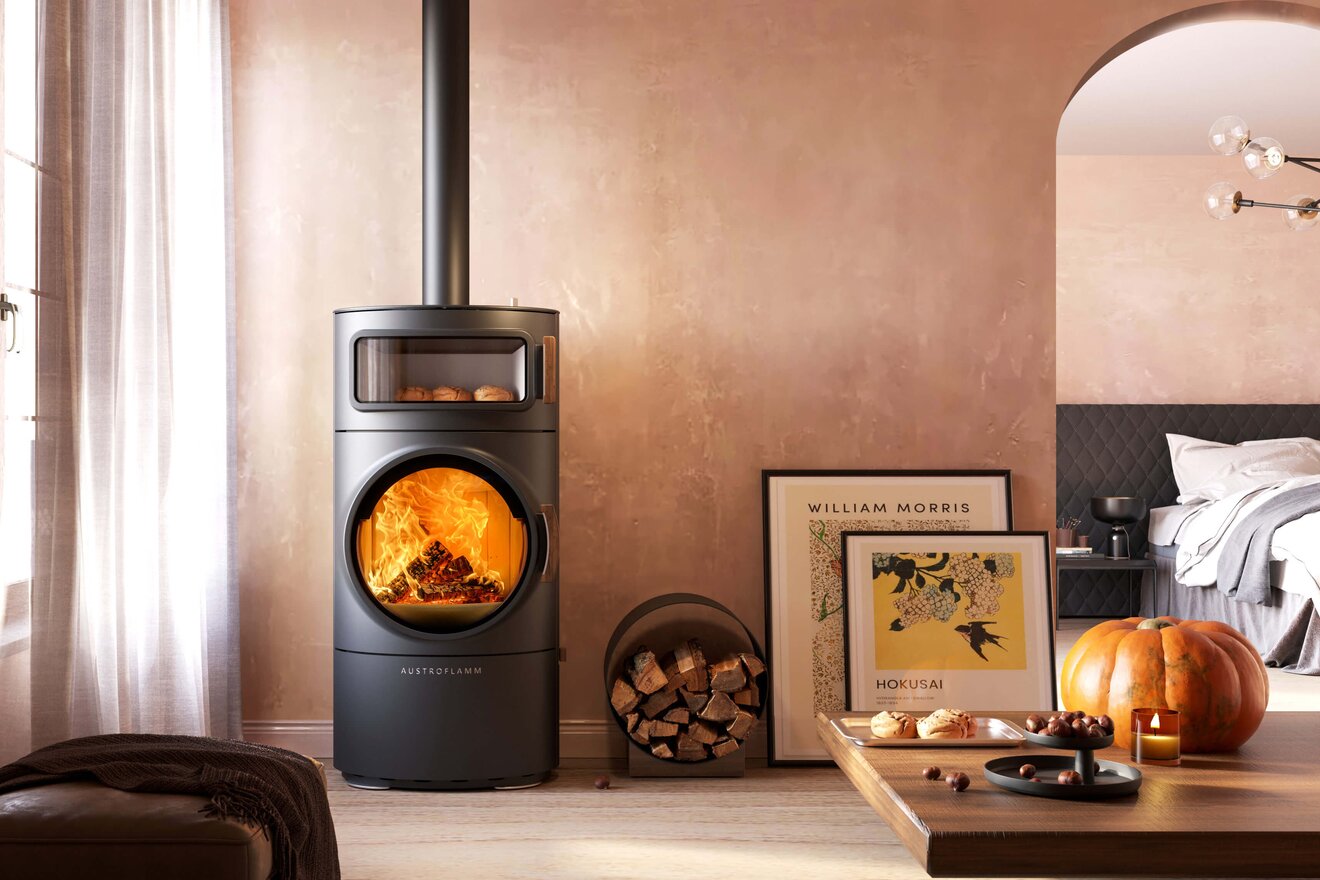
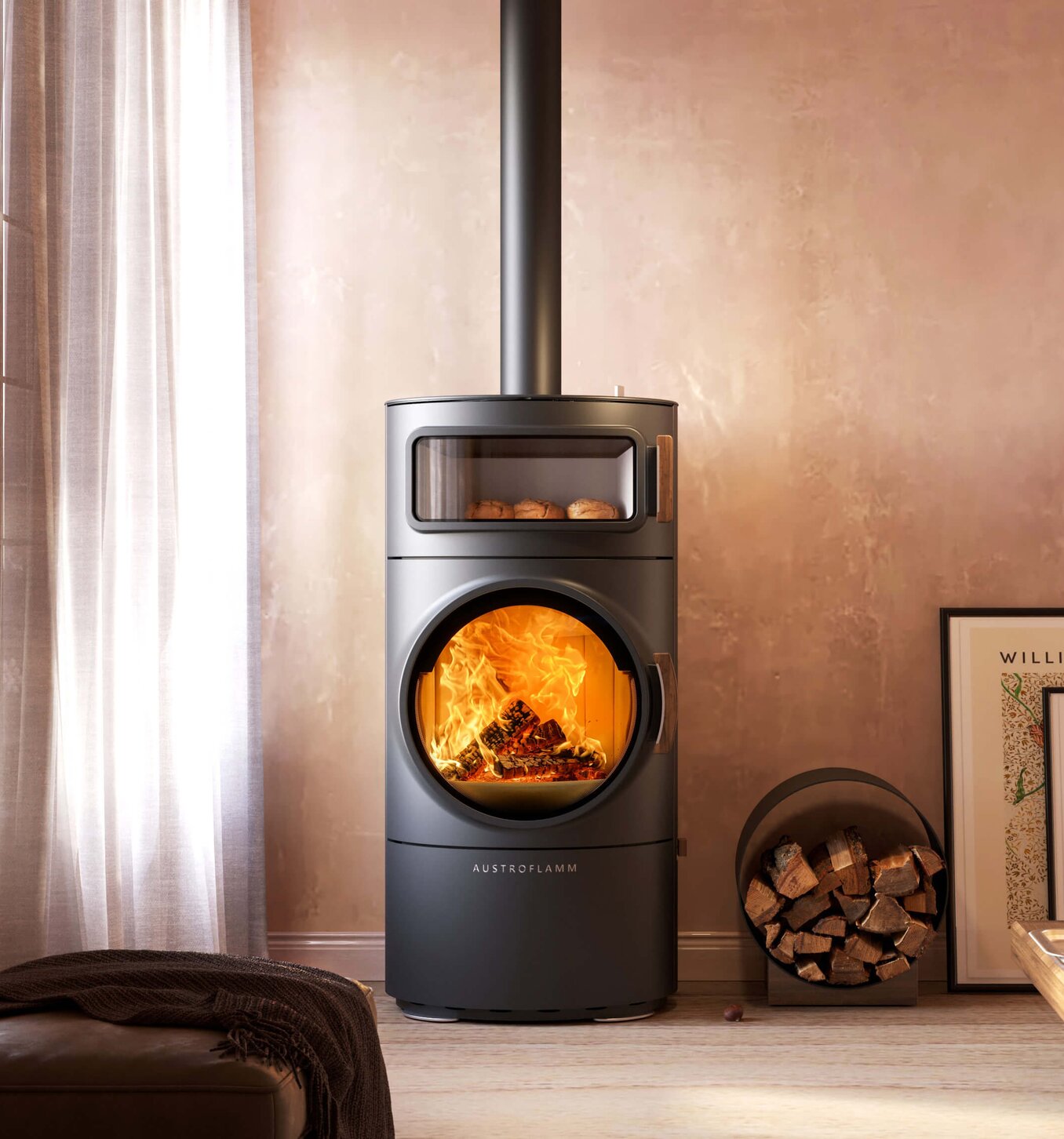


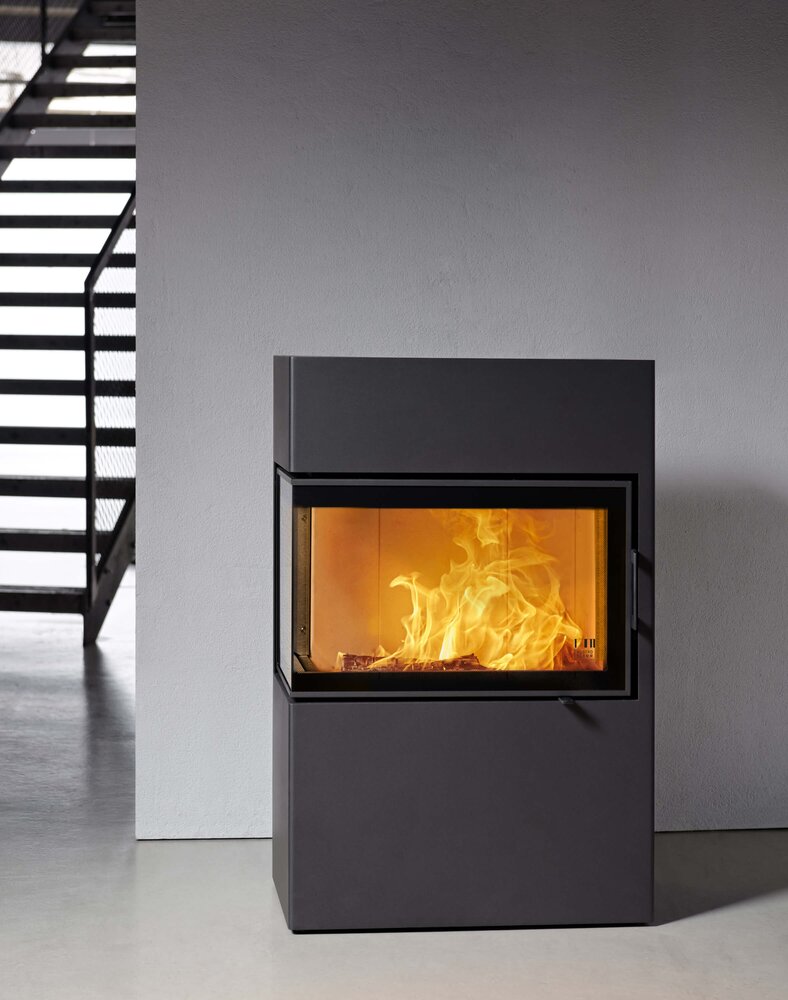

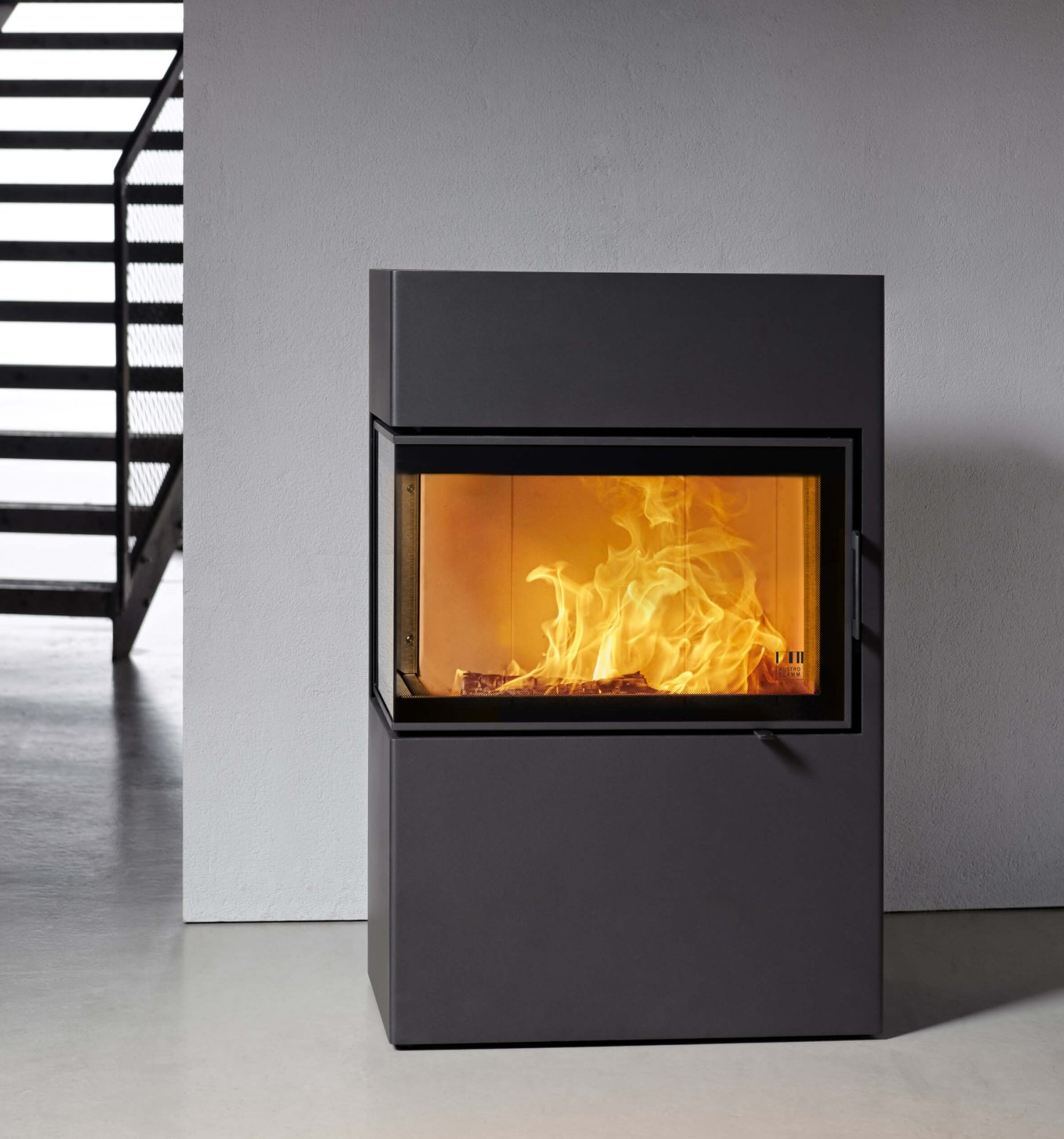


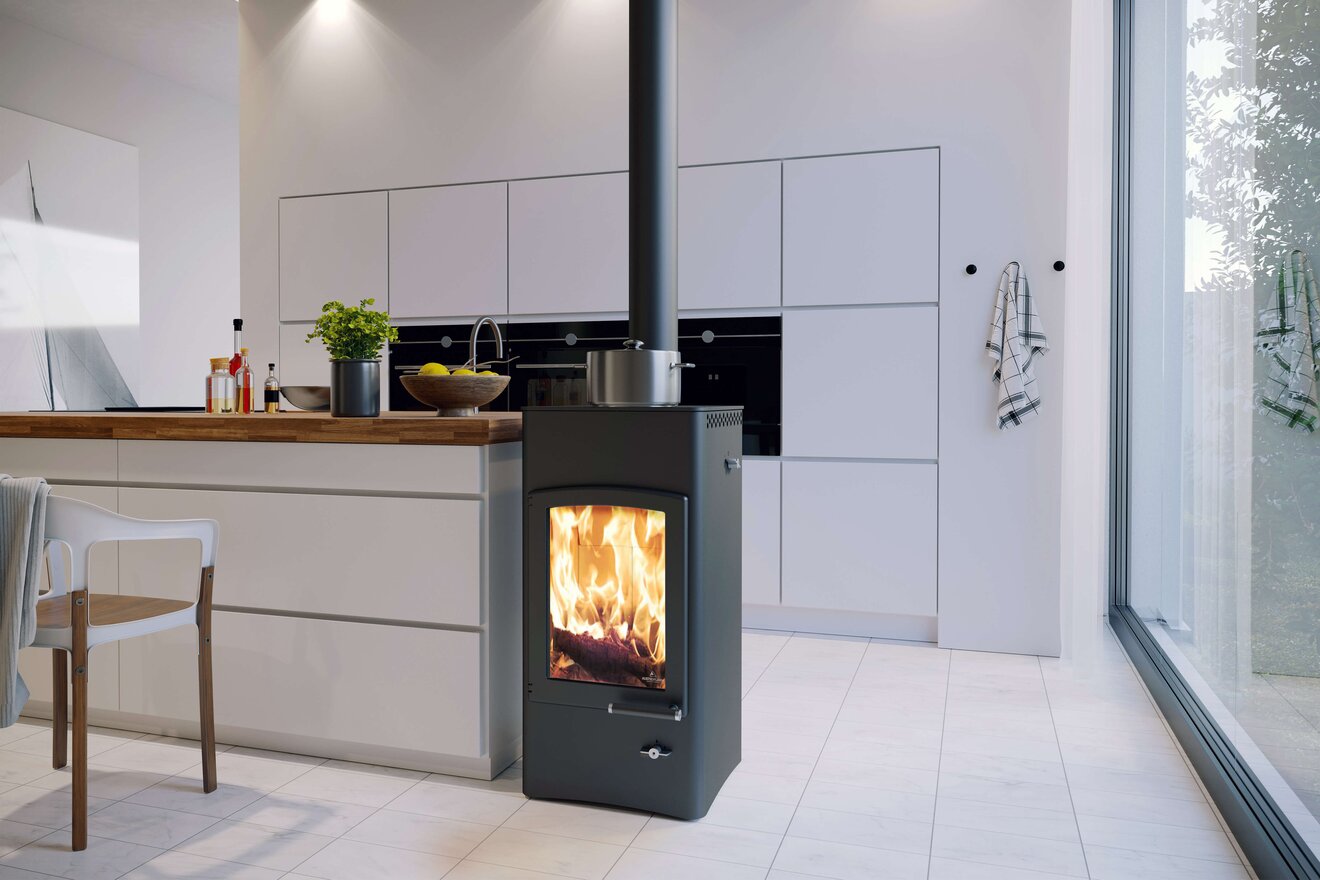


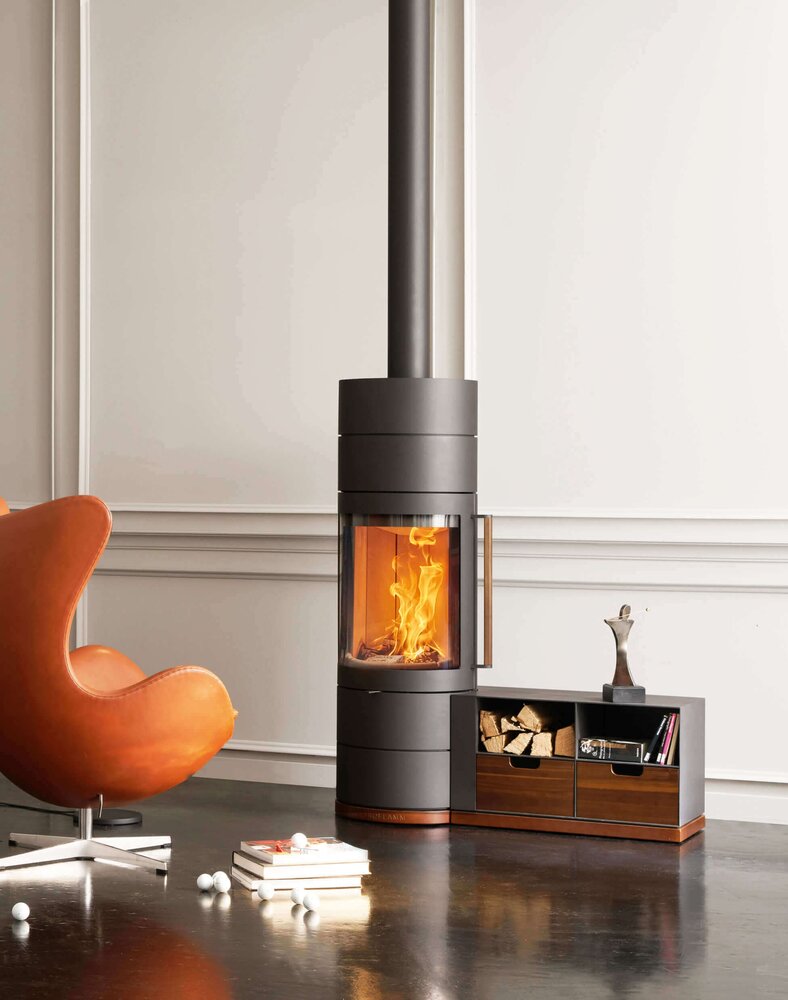


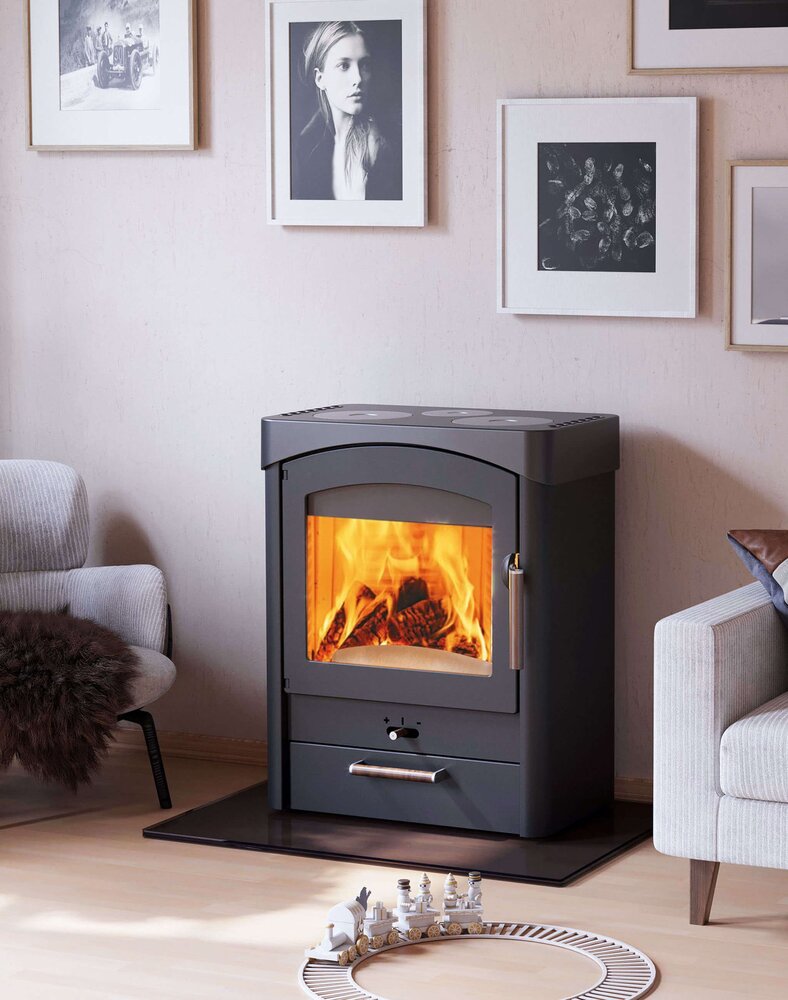


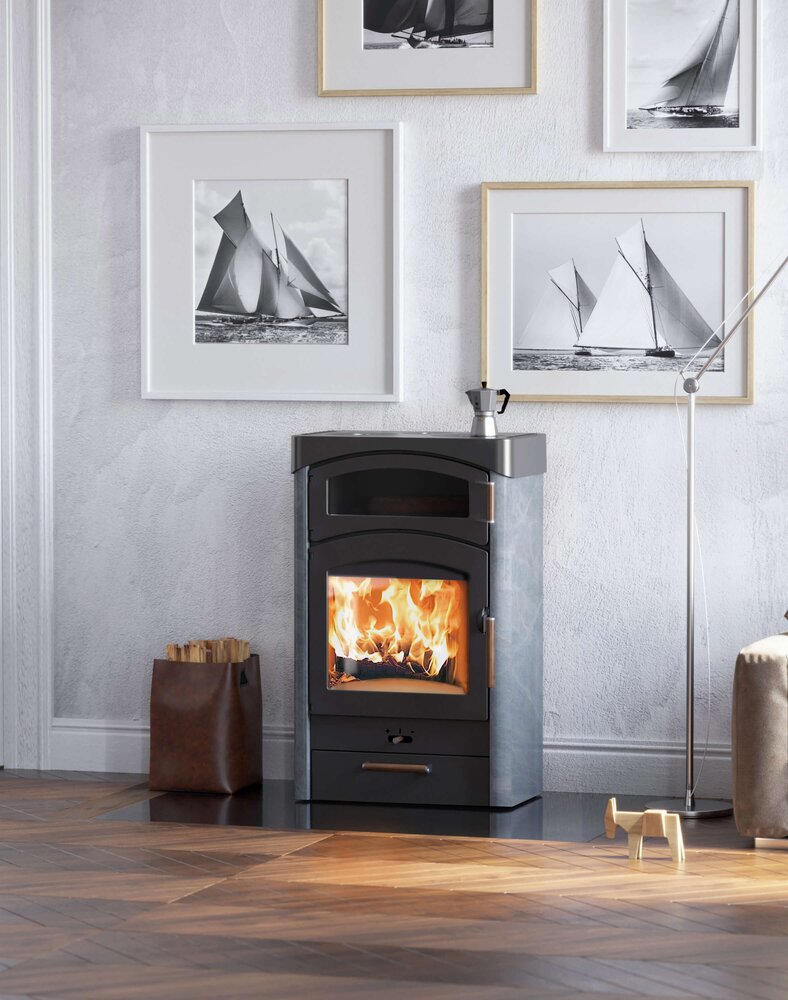


Types of Stoves from Austroflamm
Austroflamm wood-burning stoves come in different shapes to suit a variety of living situations.
- Space-saving models such as Clou Compact or Slim work well in city apartments, terraced houses or low-energy homes, bringing pleasant radiant heat and visible flame into the room even on a small footprint.
- Round stoves such as Clou Xtra or Lux soften the look of a room, distribute heat evenly and fit neatly into corners or against straight walls.
- Angular stoves with clean lines, such as Dexter, suit modern, linear interiors particularly well.
- Compact Scandinavian-style stoves such as Flok fit even into niches, creating a cozy atmosphere without dominating the room.
Buying a Wood-Burning Stove: What to Consider
A wood-burning stove should suit the look of the living space while also being the right fit for room size, building type and chimney. The most important rule: always get advice from a specialist retailer or the responsible chimney sweep before buying, so that heating output and structural requirements are clarified in advance.
Planning with a Chimney Sweep and Specialist Retailer
Installing a wood-burning stove in Austria, Germany or Switzerland must be signed off by the responsible chimney sweep before it goes into operation.
- Involve the chimney sweep and specialist retailer early to select suitable models for the chimney and living situation.
- This ensures the stove and flue system work well together and that all legal requirements are met.
Choosing the Right Heating Output for the Room
The size of the stove and firebox determines heating output; a high efficiency rating reduces both wood consumption and emissions.
- Start from room volume (length × width × height) — for example, 5 m × 6 m × 2.5 m = 75 m³.
- A rough guide is around 1 kW of nominal heat output per 15 m³ of room volume — roughly 5 kW in the example above.
- Insulation standard, windows and airtightness of the building all affect the output needed.
- An oversized stove has to be throttled, runs less efficiently, produces more emissions, and its glass panel gets dirty faster.
- A stove that's too small runs constantly at the top of its output range and wears out faster.
More on correctly sizing a stove is available in our knowledge article on stove sizing.
Where to Place the Stove
Placement is governed by binding fire-safety regulations.
- On wood or laminate flooring, a fireproof base plate made of glass or metal is required.
- Minimum clearances to furniture, wood paneling and other combustible materials must be maintained at the front, sides and rear.
- Exact clearance distances are listed in the product data sheets for each Austroflamm stove.
Room-Air Dependent or Room-Air Independent Stove?
Room-air dependent stoves draw combustion air directly from the room they're installed in. Many modern homes are very well insulated, built as low-energy or passive houses, with an especially airtight building envelope and much-reduced natural air exchange.
In such buildings, negative pressure can build up from ventilation systems or extractor hoods. In that case, a stove with an outside air connection and a particularly airtight firebox — one that can run independently of room air and is certified accordingly (for example by the German Institute for Building Technology, or to EN 16510) — is recommended. Many Austroflamm stoves are available in a room-air independent version; your specialist retailer will help select the right model for low-energy and passive houses.
Austroflamm Wood-Burning Stoves - Bringing Warmth to Life
An Austroflamm wood-burning stove is built for single rooms, making it perfect for warming up living and dining areas exactly where you need it. With the right model for your room size, you can keep one space wonderfully cozy without overheating the rest of the house.
Our storage stoves, featuring Xtra thermal storage or the Heat Memory System, soak up heat and release it slowly over many hours, so the warmth lasts long after the fire has settled. Add an optional air distribution module, and warm air travels into neighboring rooms too — all while the stove itself stays the heart of your main living space. In homes with mechanical ventilation, that warmth can spread even further through the building. A stove was never meant to replace your central heating, but it adds something a heat pump alone can't: a visible flame and the deep, radiant comfort only a real fire brings.
Frequently asked questions about stoves
How much does a good wood-burning stove cost?
The cost of an Austroflamm stove depends on factors such as model, material, output class and the specific installation situation. A stove in Austroflamm's quality segment starts at 3,500 euros; cladding options, extras and installation determine the final price.
The chosen model, whether an existing chimney can be used, and whether add-ons such as soapstone are wanted all play a role. Only expert advice can give you a realistic price — you can arrange a personal consultation with one of our specialist retailers.
Which stove suits small rooms?
For small rooms, choosing the right heating output is key — a stove that's too powerful will overheat the room quickly and can't run efficiently. What matters:
- Low nominal output (4–5 kW) for rooms up to around 30 m²
- Compact build — narrow or shallow depth
- Small clearance requirements to the wall, so it fits even in tight spaces
Austroflamm offers dedicated compact models (such as Clou Compact or Slim) for smaller living spaces — identifiable in the product filter under heating output.
How many kW should my stove have?
Required output depends on room size and how well insulated your home is. As a rough rule of thumb for well-insulated rooms:
- ~30 m² → 4–5 kW
- ~60 m² → 5–7 kW
- ~80 m² → 7–9 kW
In low-energy and passive houses, heating loads are considerably lower — a 4 kW model can already be enough for larger rooms there. Oversizing leads to overheating. More on correctly sizing stoves in our knowledge article.
How many square meters can a 6 kW stove heat?
A 6 kW stove heats around 50–70 m² in an older building, and up to 80–90 m² in a low-energy house. The rule of thumb "15 m³ of room volume per 1 kW" is a reasonable guideline for existing buildings with average insulation. In most cases, the stove is intended as a supplementary heat source rather than the sole heating for the whole house — it supports the primary heat source (such as a heat pump) and increases its efficiency.
Can a stove be placed directly against the wall?
There should generally always be some clearance from the wall to allow proper air circulation in the room. What matters most, though, are the tested minimum clearances to combustible materials, which must always be maintained. In practice:
- Every Austroflamm stove has defined minimum clearances listed in the product documentation.
- If the minimum clearance is maintained, any wall cladding is permitted.
- If that clearance is reduced, only non-combustible materials may be used: natural stone, plastered masonry, tile or metal.
Some models, such as Kamiba 59 and 76, are tested for direct wall mounting.
What wall cladding works behind a wood-burning stove?
Every Austroflamm stove has a tested wall clearance to combustible building elements, determined through safety testing to DIN EN 16510 (or its predecessor standards). This gives two scenarios:
- If the tested minimum clearance is maintained, any building material can be used for wall cladding — including wood, wallpaper or plasterboard.
- That clearance may only be reduced if the wall is a non-load-bearing wall that doesn't need special protection. In that case, only non-combustible materials may be used: natural stone, plastered masonry, tile, metal or equivalent materials.
Exact minimum clearances for your model are in the relevant product data sheet or in the download area.
Can a stove be used in a passive or low-energy house?
Yes, but only with a room-air independent (RLU) model if the house has a ventilation system installed. These stoves draw combustion air directly from outside through a separate supply duct, so they don't interfere with controlled home ventilation. Key requirements:
- RLU certification for the model (stated in the data sheet)
- An airtight chimney connection
- Coordination with a specialist installer and chimney sweep before installation
Austroflamm offers several RLU-suitable models (Type CA under the new EN 16510 test standard) — marked with the corresponding icon in the product filter.
Why can´t briquettes be burned in a wood-burning stove?
Lignite briquettes cannot be used in Austroflamm stoves — they produce significantly higher emissions (particulates, sulfur compounds) than firewood and exceed permitted limits.
What's allowed:
- dry firewood (max. 20% moisture) and certified wood briquettes made from natural wood without binders.
Not allowed:
- household waste, chipboard, treated wood, paper (except for lighting) and coal.
Burning non-approved fuels can damage the stove, void the warranty, and lead to penalties during inspections.
Which stoves are still permitted from 2025/2026?
All Austroflamm stoves meet current emissions limits under Germany's BImSchV and the corresponding Austrian standards, and may continue to be operated. What matters is whether your stove meets the second stage of the BImSchV (in force since 2024) and EN 16510 (in force since 2025). This can be checked via the nameplate on the stove, the manufacturer's test certificate or declaration of conformity, or your chimney sweep's assessment. All Austroflamm models come with full test reports and EU declarations of conformity.
How much longer can I heat with a wood-burning stove?
There's no general or planned ban on heating with wood-burning stoves. Legal regulations apply only to stoves that exceed certain emission limits — modern, standards-compliant stoves, including all Austroflamm models, may continue to be operated without restriction. Wood as a fuel is gaining importance for energy security and resilience, and the wood-burning stove along with it. In some municipalities, temporary restrictions can apply during particulate-matter alerts — this explicitly does not affect stoves used as a primary heat source.
What is a water-bearing stove, and is it worth it?
A water-bearing stove transfers part of its heat to the heating system's water, feeding into central heating. This makes particular sense when a buffer tank is available or can be installed, wood is a cheap and locally available fuel, and the building's heating load is higher with several rooms to heat.
For single-room heating or simply for the ambience of a stove, a conventional model is usually the simpler and more affordable choice. Note: water-bearing models generally need an electric circulation pump, though gravity-fed systems without electricity also exist.
Does a wood-burning stove still make sense today?
Yes, for several reasons. As a supplementary heat source, a stove offers real value:
- energy security independent of gas or district heating
- wood as a regional, CO₂-neutral fuel
- the unique atmosphere of an open flame
- and a useful complement to a heat pump
A stove is especially efficient on cold peak days. As a sole heat source it's usually not ideal, but combined with a main heating system it's a worthwhile investment with a long lifecycle.
Can I heat reliably with a wood-burning stove during a crisis?
Yes — this is one of the biggest practical advantages of a stove. Wood as a fuel is regionally available, storable, and independent of energy supply chains. In practice, this means:
- heat stays secured during gas shortages
- energy price shocks or supply bottlenecks
- wood can be bought in advance and stored dry
- and stoves need no electricity to operate (except water-bearing models with a pump).
As a supplementary heat source, a stove offers real energy security for the whole household.